As a laboratory at the China National Engineering Research Center for Information Technology in Agriculture (Nercita), we focus on advancing key technologies and their applications in strawberry harvesting robots, laser weeding robots, and robotic systems for protected tomato cultivation.
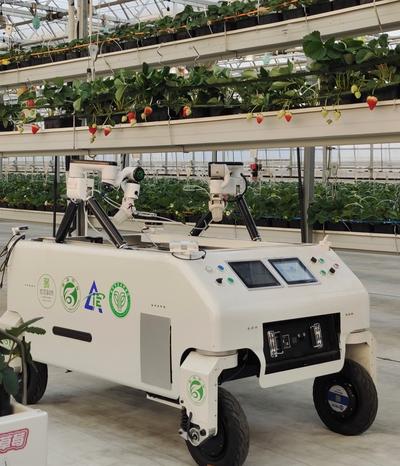
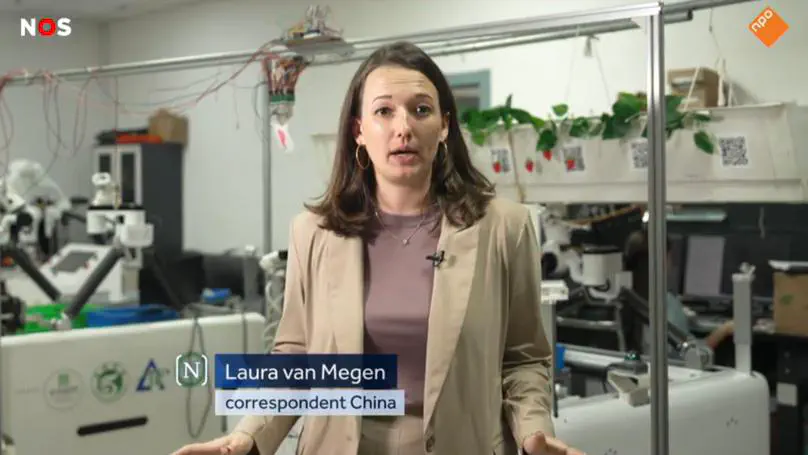
In recent weeks, our team has been interviewed by several Chinese and international media outlets about our strawberry harvesting robot and our work on foundation models for open-field vegetable production.
The coverage reflects growing public interest in how artificial intelligence and robotics can address real agricultural challenges. Reports highlighted our work on fruit recognition and localization, active obstacle clearing, low-damage harvesting, autonomous navigation, and dual-arm coordination.

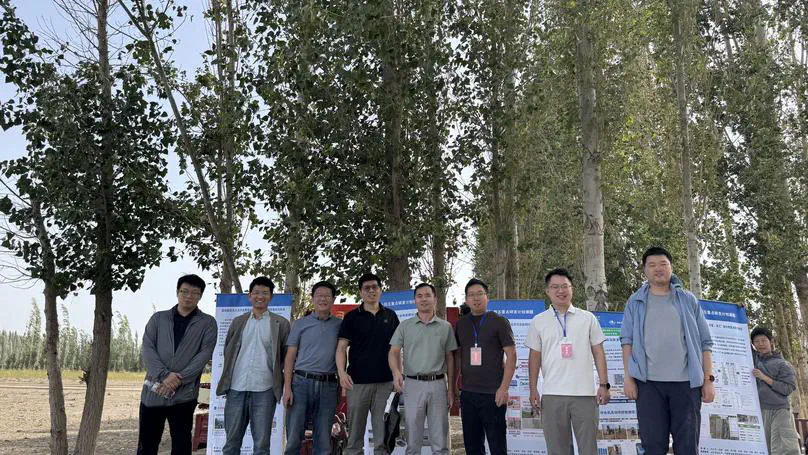
From September 20 to 21, our team traveled to Heshuo County in Bayingolin, Xinjiang, to attend the 2026 Xinjiang (Bayingolin–Heshuo) Processing Chili Industry Development Conference and Production–Sales Matchmaking Event. During the visit, we conducted field tests of our multi-machine coordination system at a chili production base in Suhate Township.
The tests formed part of an on-site demonstration and evaluation for the National Key R&D Program project on key technologies and intelligent machinery for industrialized agriculture. Focusing on coordinated machinery operations in open-field vegetable production, we evaluated the feasibility and performance of our cloud–edge–device scheduling approach under real chili-harvesting conditions.

We are excited to share that our team has begun field testing WeedHitter 2, the latest version of our laser weeding robot.
WeedHitter 2 features a new modular design that brings the platform closer to an industrial-ready system. The redesigned architecture supports more efficient integration, testing, maintenance, and future upgrades as we continue moving the technology from research prototypes toward practical agricultural deployment.